
105D31 / 95D31 / 65D31 / N90 / N80 / N70 – JIS Standard SLI Battery
Chengguang Energy 105D31 (95D31 / 65D31 / N70 / N70Z / N80 / N90) — JIS-standard automotive battery. Maintenance-free, 90Ah, 650 A. OEM factory-direct, IATF 16949 certified.
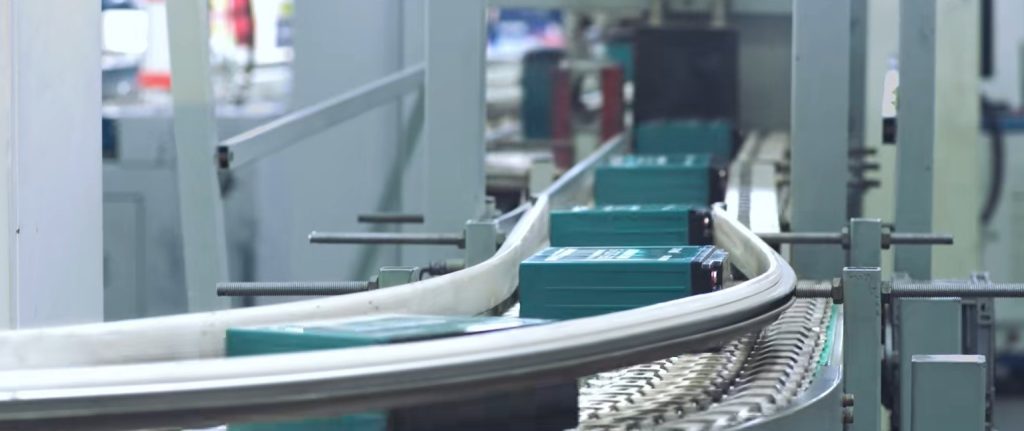
Every battery we manufacture is built under our customers’ brands. This page is the technical reference for distributors, importers, and procurement managers evaluating Chengguang Power Tech as an OEM manufacturing partner. Below the technical content, you will find individual product listings with specification sheets.
| 4 | 5 | 18 | 70+ |
| Battery Technologies | Global Standards | Assembly Lines | Export Countries |
| SLI · AGM · EFB · HD | JIS · DIN · BCI · AS · SA | Highly Automated | Factory-Direct Supply |
We manufacture across four lead-acid battery platforms. Each serves a distinct market segment and vehicle type. Understanding the differences helps you select the right products for your market.
The foundational automotive battery technology. SLI (Starting, Lighting, Ignition) batteries deliver a short, high-current burst to crank the engine, then recharge from the alternator. This category represents the largest share of the global automotive aftermarket — an estimated 400 million units annually according to industry estimates from the International Lead Association.
Construction & Chemistry
A standard SLI battery contains six 2V cells connected in series to produce 12V. Each cell holds positive plates (lead dioxide, PbO₂), negative plates (sponge lead, Pb), and separators, immersed in dilute sulfuric acid electrolyte (typically 1.260–1.280 specific gravity at full charge).
Our SLI batteries use:
| SLI Technical Parameters | Typical Range |
|---|---|
| Nominal voltage | 12V (6 cells × 2V) |
| CCA rating (SAE) | 300–950 A |
| Reserve capacity (RC) | 60–180 min |
| 20-hour capacity (C20) | 35–100 Ah |
| Self-discharge (25°C) | 3–5% per month (Ca-Ca) |
| Water loss (60°C overcharge) | ≤ 4 g/Ah (maintenance-free) |
| Design life (normal use) | 3–5 years |
| Operating temperature | -30°C to +60°C |
Market Applications
Passenger cars, SUVs, light commercial vehicles (LCV), motorcycles (small-frame), and marine starting applications where the alternator provides the primary electrical supply after starting. Not recommended for deep-cycling applications — repeated discharge below 50% state of charge significantly reduces service life.
Available as OEM: Standard or maintenance-free. Custom case, terminal, handle, and label configurations.
AGM technology represents the premium tier of lead-acid starting batteries. The electrolyte is absorbed in a fiberglass mat separator rather than flowing freely. This design enables higher performance, longer cycle life, and spill-proof operation — critical for modern vehicles with aggressive fuel-saving technologies.
How AGM Works
In an AGM battery, micro-glass fiber separators hold the sulfuric acid electrolyte in suspension between the plates. The cell operates under slight pressure with a recombinant design: oxygen generated at the positive plate during charging recombines at the negative plate, converting back to water. This closed-loop system eliminates the need for watering and prevents acid leakage.
Key Advantages Over Standard Flooded
| Performance Metric | Standard Flooded | AGM | Advantage |
|---|---|---|---|
| Cycle life (50% DoD) | 150–200 cycles | 400–600 cycles | 2–3× longer |
| Charge acceptance | 0.2–0.3 C | 0.5–1.0 C | 2–3× faster recharge |
| Internal resistance | 4–8 mΩ | 2–4 mΩ | Lower voltage drop |
| Vibration resistance | Moderate | High | Compressed element stack |
| Cold cranking performance | Standard | Superior | Lower internal resistance at -18°C |
| Deep discharge recovery | Poor | Good | Recombinant chemistry |
| Mounting orientation | Upright only | Any angle (spill-proof) | Flexible installation |
Technical Specifications
Application Requirements
AGM batteries are specified (not optional) for most vehicles with start-stop systems, regenerative braking, and advanced energy management. These vehicles demand:
Vehicles with advanced start-stop and brake energy recuperation — such as many European models from 2015 onward and North American models from 2018 onward — require AGM or EFB technology. Installing a standard flooded battery in these vehicles results in premature failure, typically within 6–12 months of normal driving.
EFB technology bridges the gap between standard flooded SLI batteries and premium AGM. It is the cost-effective entry point for start-stop vehicles with moderate electrical demands.
Construction Differences from Standard SLI
| Component | Standard Flooded | EFB |
|---|---|---|
| Positive plate grid | Lead-calcium alloy | Lead-calcium-tin with higher tin content (1.2–1.8%) for corrosion resistance |
| Positive active material | Standard lead dioxide paste | Carbon-enhanced paste with polyester scrim reinforcement |
| Negative active material | Standard sponge lead | Carbon additive (0.2–2.0%) for improved charge acceptance |
| Separator | PE envelope | PE envelope with enhanced pore structure |
| Electrolyte | Standard 1.260–1.280 SG | Higher-density 1.280–1.290 SG with additives |
| Cycle life (50% DoD) | 150–200 cycles | 300–400 cycles |
| Water consumption | Standard | Reduced — approximately 1 g/Ah lower than standard |
Where EFB Fits
EFB is the correct choice when:
EFB should NOT be used in vehicles requiring AGM as specified by the manufacturer. Installing EFB where AGM is required typically results in failure within 12–18 months due to insufficient charge acceptance under regenerative braking conditions.
Heavy-duty batteries power trucks, buses, construction machinery, agricultural equipment, marine applications, and stationary engines. The operating environment is severe: high vibration, wide temperature swings, deep cycling, and extended idle periods.
Design Features
| Heavy Duty Category | Typical CCA Range | Typical C20 Range | Vehicle Types | Terminal Standard |
|---|---|---|---|---|
| Group 31 | 900–1,150 A | 100–120 Ah | Trucks, buses, off-road | SAE post / stud |
| 4D | 900–1,350 A | 150–200 Ah | Heavy trucks, marine | SAE post / stud / flag |
| 8D | 1,300–1,600 A | 220–260 Ah | Large marine, stationary | SAE post / stud / flag |
| DIN HD | 600–900 A (EN) | 100–225 Ah | European trucks, buses | DIN taper |
| JIS HD | 500–900 A (JIS) | 70–200 Ah | Japanese trucks, construction | JIS taper |
Choosing the right battery technology depends on the vehicles in your target market. Use this table to match battery type to application.
| Vehicle / Application | Recommended Battery | Notes |
|---|---|---|
| Standard gasoline/diesel without start-stop | SLI (standard flooded) | Most cost-effective. Maintenance-free recommended for aftermarket. |
| Start-stop, entry-level (engine-off only) | EFB | Required by vehicle manufacturer. Standard flooded will fail within 12 months. |
| Start-stop with regenerative braking | AGM | Required. EFB will not provide sufficient charge acceptance. |
| Luxury / high-spec vehicles | AGM | Higher electrical loads and multiple ECUs demand stable voltage. |
| Hybrid (non-plug-in) auxiliary battery | AGM | AGM handles partial-state-of-charge cycling in 12V auxiliary role. |
| Trucks, buses, off-road (24V system) | Heavy Duty × 2 (series) | Two 12V HD batteries wired in series. Match age and capacity. |
| Marine starting | HD or AGM | AGM for deep-cycle tolerance; HD for pure cranking. |
| Agricultural / construction | Heavy Duty | High vibration resistance required. Maintenance-free HD with stud terminals preferred. |
| UPS / standby power | VRLA (AGM or gel) | Deep-cycle design. Contact us for UPS-specific product range. |
The same battery chemistry ships to 70+ countries — but the case dimensions, terminal types, and performance rating methods change by region. This table maps our manufacturing standards to target markets with typical battery models.
| Standard | Primary Markets | Case Reference System | Terminal Types | CCA Rating Method | Common Models Produced |
|---|---|---|---|---|---|
| JIS | Japan, Southeast Asia, Middle East, Africa, Oceania | B/D series (B19–D31, G51–F51) | JIS taper (T1 thin / T2 thick), bolt-through | JIS D5301 (-18°C) | 40B19L, 55D23L, 65D26L, 75D26L, 80D26L, 95D31L, 115D31L, 130D31L, 145G51, 150F51, 170F51, N40, NS60, NS70 |
| DIN / EN | Europe, Russia, CIS, South America | LN series (LN1–LN5) and H/T series (540–680) | DIN taper, SAE post, bolt-through | EN 50342-1 (-18°C) | LN1, LN2, LN3, LN4, LN5, 540 126 033, 560 130 053, 585 200 080, 600 138 074, 610 170 090, 620 190 100, 630 210 110, 640 230 125 |
| BCI | USA, Canada, Mexico, Central America, Caribbean | Group numbers (24–96R, 4D, 8D) | SAE post (top and/or side), dual terminal | SAE J537 (-18°C) | Group 24, 24F, 27, 27F, 34, 34/78, 35, 51R, 58, 65, 75, 78, 86, 94R / H7, 96R, 48 / H6, 49 / H8, 31, 4D, 8D |
| AS | Australia, New Zealand, Pacific Islands | Australian model numbers (N-series, century-equivalent) | SAE post, JIS taper | AS 2149 (-18°C) | NS40ZL, N50ZL, N70ZL, N70ZZL, N150, 55D23L, 75D23L, 80D26L |
| SA | South Africa, neighboring markets | SA model numbers (600-series) | SAE post, DIN taper, bolt-through | SANS 2 (-18°C) | 638, 640, 646, 647, 652, 654, 657, 658, 668, 671 |
Note: CCA ratings are not directly comparable across standards. SAE J537 CCA is typically 10–20% higher than EN 50342-1 CCA for the same battery, and JIS D5301 uses a different test procedure entirely. When specifying battery requirements, always indicate the test standard. We cross-reference ratings during engineering to ensure the battery meets your market’s labeling requirements.
The performance of a lead-acid battery begins with raw material quality. We source and control materials at every production stage.
| Material | Source | Quality Standard | Purpose |
|---|---|---|---|
| Primary lead (99.97% Pb) | Certified smelters, LME-registered brands | GB/T 469, ISO 8287 | Positive/negative grids, terminals, straps |
| Lead oxide (PbO) | In-house ball-mill production, 15 mills | 70–80% oxidation degree, ≤0.05% free lead | Positive and negative active material paste |
| Sulfuric acid | Chemical-grade, diluted to specified gravity in-house | GB/T 534, ISO 910 | Electrolyte |
| Polypropylene (PP) copolymer | Import / domestic grades, UV-stabilized | Impact strength ≥ 8 kJ/m² at -30°C | Battery case and cover |
| Glass fiber mat (AGM) | Compressed micro-glass fiber, imported | 90–95% porosity, ≤ 0.5 mm compressed thickness | AGM separator (oxygen transport + acid retention) |
| PE envelope separator | Ribbed polyethylene, low electrical resistance | ≤ 50 mΩ·cm² resistivity at 25°C | SLI / EFB plate separation |
| Carbon additive (EFB) | High-surface-area carbon black / graphite | BET surface ≥ 600 m²/g, ≤ 0.1% ash | Negative active material conductivity enhancement |
Every Chengguang battery goes through a minimum of 15 process stages from raw material to finished product. The factory operates on a continuous-flow production model — materials enter one end, finished batteries ship from the other.
Our quality system operates under IATF 16949:2016 — the global quality management standard for automotive series production and service parts. This is the same standard required of tier-1 suppliers to automotive OEMs.
| Test | Frequency | Standard Reference | Acceptance Criteria |
|---|---|---|---|
| Grid dimensional check | Every casting/punching shift start + hourly spot | Internal QC-WI-001 | ±0.1 mm tolerance on critical dimensions |
| Paste density | Every batch | Internal QC-WI-002 | ±0.1 g/cm³ of specification |
| Plate weight | Every pallet (statistical sampling) | Internal QC-WI-003 | ±2% of target weight |
| Curing verification | Every curing cycle (humidity/temperature log) | Internal QC-WI-004 | Per curing profile (typical 24–48 hr cycle) |
| COS weld integrity | Every element group (visual + pull test sampling) | Internal QC-WI-005 | No visible cracks; ≥ 800 N pull strength |
| Test | Standard | What It Measures | Typical Pass Threshold |
|---|---|---|---|
| Open circuit voltage (OCV) | EN 50342-1 | State of charge (rested ≥ 12 hr) | ≥ 12.60V (100% SoC) |
| Cold cranking amps (CCA) | SAE J537 / EN 50342-1 / JIS D5301 | Starting power at -18°C | ≥ 100% of label rating |
| Reserve capacity (RC) | SAE J537 / EN 50342-1 | Minutes at 25A discharge to 10.5V | ≥ 100% of label rating |
| 20-hour capacity (C20) | EN 50342-1 | Total energy storage | ≥ 100% of label rating |
| Charge acceptance | EN 50342-1 | Ability to accept charge from alternator | AGM: ≥ 2.0 × I20; EFB: ≥ 1.5 × I20 |
| Water consumption | EN 50342-1 | Electrolyte loss during overcharge | ≤ 4 g/Ah (MF); ≤ 3 g/Ah (EFB); ≤ 1 g/Ah (AGM) |
| High-rate discharge | Internal | Voltage stability under peak load | Per product specification |
| Leak test | Internal | Case seal integrity | Zero leakage at specified pressure |
| Test | Standard | Sample Size | Purpose |
|---|---|---|---|
| Vibration resistance | EN 50342-1 / SAE J537 | Per AQL 1.0 | Simulate 8–20 hours of vehicle vibration |
| Life cycle test (50% DoD) | IEC 60095-1 / EN 50342-1 | 3–5 per lot | Verify cycle life meets design specification |
| Overcharge endurance | EN 50342-1 | 3 per lot | Validate battery survives alternator regulator failure scenarios |
| Thermal cycling | Internal | 3 per lot | Temperature shock from -30°C to +60°C |
| Charge retention (self-discharge) | EN 50342-1 | Per AQL 1.0 | ≤ 20% capacity loss after 21 days at 40°C |
Pre-shipment inspection: Available on every order. Standard documentation includes production date, batch number, test results summary, and packing list. Third-party inspection by SGS, Bureau Veritas, TÜV, or Intertek is supported at customer request and cost.
Every battery we manufacture is produced to customer specification. This section defines every parameter you can control.
| Parameter | Customization Options | Notes |
|---|---|---|
| Brand identity | Your brand name hot-stamped or molded into case; printed on label; featured on carton | Mold modification if case-embossed logo required |
| Case design | Standard or custom dimensions; BCI/DIN/JIS/AS/SA standard cases available from existing molds | Custom mold: approximately 30–45 days tooling lead time |
| Case material | PP copolymer, standard black or dark grey; custom color available per volume | MOQ applies for custom color |
| Case lid type | Flat lid, labyrinth lid, dual lid, or customer-specified | Standard for most models; labyrinth for HD batteries |
| Terminal type | SAE post (top/side/dual), JIS taper (T1/T2), DIN taper, bolt-through (M6/M8/M10), flag terminal, stud terminal | Terminal alloy: lead-calcium or lead-tin per application |
| CCA rating | Custom-rated to your market requirements | Cross-reference between JIS/DIN/BCI/EN per your label specification |
| Reserve capacity | Custom-rated | |
| Capacity (C20) | Custom-rated | |
| Handle type | Integrated PP, rope, strap, folding, or none | |
| Label & packaging | Your artwork applied; carton printing with barcode/QR; multilingual datasheet insert | Artwork files: AI/PDF/PSD preferred |
| Accessories | Terminal covers, anti-corrosion washers, hold-down brackets, state-of-charge indicator | |
| Pallet configuration | Custom pallet patterns, mixed-SKU pallets, wood/plastic pallet |
Sample production: Pre-production samples are produced on the same lines as your bulk order — not on a separate pilot line. This guarantees that the samples you approve match the production you receive. Sample lead time: 7–15 working days from specification confirmation.
| Logistics Parameter | Detail |
|---|---|
| Standard packing | Individual corrugated carton → palletized (standard 4-way wood pallet) → full stretch-wrap → container loading |
| Container types | 20-foot (20GP), 40-foot (40GP), 40-foot high cube (40HC) |
| Typical 20GP capacity | 700–900 batteries depending on battery size and case dimensions |
| Typical 40HC capacity | 1,500–2,100 batteries depending on battery size |
| Mixed SKU loading | Available — multiple battery models in one container |
| LCL (less than container load) | Available for trial orders and small-volume shipments |
| Lead time (standard models) | 20–35 days from sample approval to container-ready |
| Lead time (custom tooling) | 30–45 days mold fabrication + 20–35 days production |
| Export documentation | Commercial invoice, packing list, bill of lading (B/L), certificate of origin (Form E / Form A / CO), MSDS (Material Safety Data Sheet) for battery transport, inspection certificate (if requested) |
| Incoterms | FOB Xingang (Tianjin) standard. CIF / CFR / EXW available on request. |
| Shipping lines | Major container lines from Tianjin/Xingang port. Transit times available at quotation stage. |
Special handling: Lead-acid batteries are classified as Dangerous Goods (UN 2794, Class 8) for flooded types with free acid. AGM/VRLA batteries classified as UN 2800 (non-spillable) may ship under reduced DG requirements. All shipments comply with IMDG Code for sea freight and IATA DGR for any air shipments (air freight available only for dry-charged or AGM types).
| Region | Dominant Standard | Top-Selling Battery Types | Key Market Drivers |
|---|---|---|---|
| Middle East | JIS, DIN | SLI (55D23, 65D26, 80D26, LN3, LN4) | Hot climate → higher water loss tolerance required; Japanese vehicle dominance; price-competitive aftermarket |
| Southeast Asia | JIS | SLI (NS40–NS70, 55B24–80D26), EFB growing | Japanese vehicle fleet; start-stop adoption increasing in new cars; motorcycle battery segment significant |
| Africa | JIS, DIN, SA | SLI (DIN 540–668, JIS mid-size), HD for trucking | Rapid motorization; mixed vehicle fleet (Japanese + European); road conditions demand vibration resistance |
| Europe | DIN / EN | AGM (LN3–LN5), EFB (LN2–LN3), SLI declining in aftermarket | Start-stop mandatory on new cars since ~2014; AGM growing at >10% CAGR; premium quality demanded |
| Russia / CIS | DIN | SLI (DIN 540–640), HD (DIN HD 180–225) | Cold climate → high CCA requirements; European vehicle fleet; HD for commercial transport |
| North America | BCI | AGM (H6/H7/H8 for start-stop), SLI (Group 24–35 for older fleet), HD (Group 31, 4D, 8D) | Start-stop penetration growing; large existing fleet of standard SLI vehicles; HD for trucking industry |
| South America | DIN, BCI | SLI (DIN medium-size, BCI Group 24–27), HD growing | Mixed vehicle fleet; ethanol vehicles require higher CCA; price-sensitive market |
| Australia / NZ | AS, JIS | SLI (NS40–N70ZZ), AGM growing for 4×4/SUV, HD for mining/agriculture | Japanese vehicle dominance; extreme heat in north; mining sector demands heavy-duty |
Yes. Specification sheets for our standard battery models are available on request. These include dimensional drawings, terminal configurations, CCA/RC/C20 ratings, and performance curves. For custom OEM specifications, our engineering team provides a detailed specification sheet with your first quotation.
We operate under IATF 16949 quality management, which mandates statistical process control (SPC) at every production stage. Key parameters — grid thickness, paste density, plate weight, COS weld strength, formation charge profiles, and CCA output — are monitored continuously. Test data is retained for every production lot. You can request batch-specific test reports with any order.
Yes. Send us the battery model number, case dimensions (L×W×H), terminal type and position, CCA rating (and the test standard used), reserve capacity, and capacity (C20). Our engineering team will produce a cross-reference specification and a pre-production sample for your approval. We match or exceed your current specifications — not as a claim, but as a documented test result.
CCA test methods differ. SAE J537 CCA (USA) tests at -18°C for 30 seconds, requiring voltage ≥ 7.2V. EN 50342-1 (Europe) also tests at -18°C but requires voltage ≥ 7.5V after 10 seconds and ≥ 7.2V after 30 seconds — a stricter standard. JIS D5301 uses a different test procedure and cannot be directly compared. Our engineering team handles the cross-referencing. Tell us the standard your market uses and the CCA number you want on the label — we engineer to that target.
Batteries that do not pass 100% testing (OCV, CCA, RC, leak test) are rejected and recycled through our in-house recovery system. Lead is reclaimed and returned to the smelting process. No battery leaves our factory without passing every required test. This is not a sampling check — it is a 100% test on every unit for the critical parameters listed in Section 5.2.
Service life depends on the battery type, vehicle, climate, and driving pattern. Based on field data from our distribution partners:
Warranty terms are agreed per order and per market. As a factory-direct OEM supplier, we stand behind our manufacturing quality. Typical OEM warranty approaches: pro-rata replacement credit for manufacturing defects confirmed by root cause analysis; or a negotiated warranty reserve built into the purchase price. Terms are finalized at the purchase agreement stage.
Yes. We produce pre-production samples — typically 5–10 batteries per model — on the same production lines used for your bulk order. Sample cost: unit price plus shipping. Sample cost is credited back against your first bulk order if the order proceeds. Sample lead time: 7–15 working days from specification confirmation.
Yes — flooded lead-acid batteries with free electrolyte are classified as UN 2794, Class 8 dangerous goods for sea transport. We provide the required MSDS, DG declaration, and packaging certification. AGM and VRLA batteries classified as UN 2800 (non-spillable) ship under reduced requirements. We manage all DG documentation as part of our standard export service.
Contact our sales team with your target market, vehicle types, and estimated volumes. We walk you through the process:
We work with first-time importers regularly. Our export documentation package is complete and carrier-compliant — we have never had a container held at destination for paperwork issues.
Tell us your market, your target battery models, and your volume estimates. We respond with a specification-matched quotation and sample timeline within one business day.
Showing all 14 results
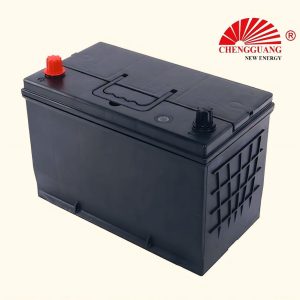
Chengguang Energy 105D31 (95D31 / 65D31 / N70 / N70Z / N80 / N90) — JIS-standard automotive battery. Maintenance-free, 90Ah, 650 A. OEM factory-direct, IATF 16949 certified.
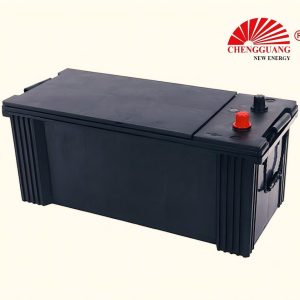
Chengguang Energy 145G51 (N150) — JIS-standard automotive battery. Maintenance-free, 135Ah, 900 A. OEM factory-direct, IATF 16949 certified.
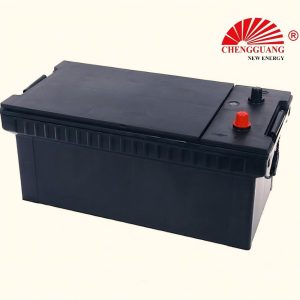
Chengguang Energy 190H52 (N200) — JIS-standard automotive battery. Maintenance-free, 200Ah, 1,100 A. OEM factory-direct, IATF 16949 certified.
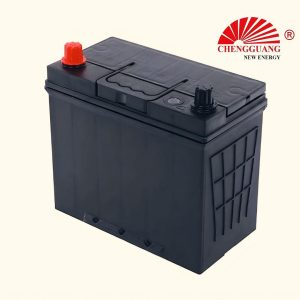
Chengguang Energy 55B24 (N45 / N40) — JIS-standard automotive battery. Maintenance-free, 45Ah, 370 A. OEM factory-direct, IATF 16949 certified.
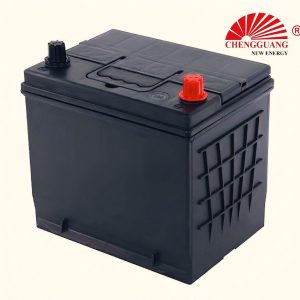
Chengguang Energy 55D23 (75D23) — JIS-standard automotive battery. Maintenance-free, 60Ah, 500 A. OEM factory-direct, IATF 16949 certified.
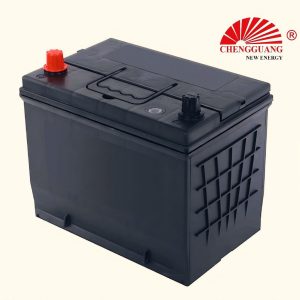
Chengguang Energy 65D26 (55D26 / NS70 / N50 / N50Z) — JIS-standard automotive battery. Maintenance-free, 65Ah, 550 A. OEM factory-direct, IATF 16949 certified.
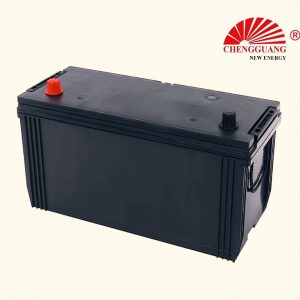
Chengguang Energy 95E41 (W105 / N100) — JIS-standard automotive battery. Maintenance-free, 100Ah, 750 A. OEM factory-direct, IATF 16949 certified.
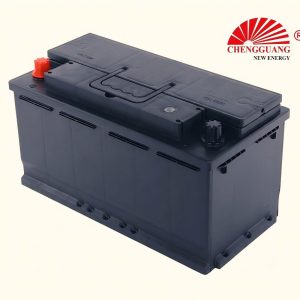
Chengguang Energy 60038 (DIN100 / 600.38) — DIN-standard automotive battery. Maintenance-free, 100Ah, 870 A. OEM factory-direct, IATF 16949 certified.
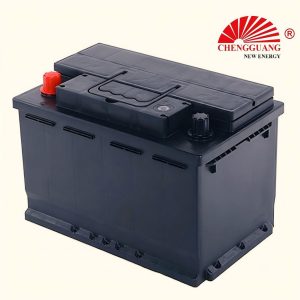
Chengguang Energy 56638 (DIN66 / 566.38) — DIN-standard automotive battery. Maintenance-free, 66Ah, 540 A. OEM factory-direct, IATF 16949 certified.
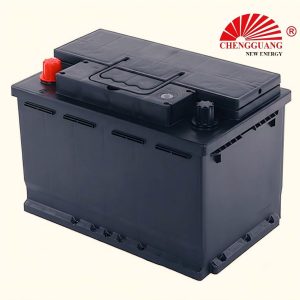
Chengguang Energy 57117 (DIN70 / 571.17) — DIN-standard automotive battery. Maintenance-free, 70Ah, 600 A. OEM factory-direct, IATF 16949 certified.
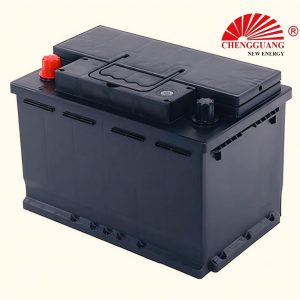
Chengguang Energy 57219 (DIN72 / 572.19) — DIN-standard automotive battery. Maintenance-free, 72Ah, 630 A. OEM factory-direct, IATF 16949 certified.
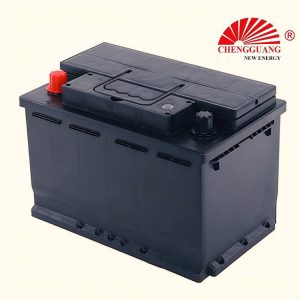
Chengguang Energy 57412 (57413 / DIN75) — DIN-standard automotive battery. Maintenance-free, 75Ah, 660 A. OEM factory-direct, IATF 16949 certified.
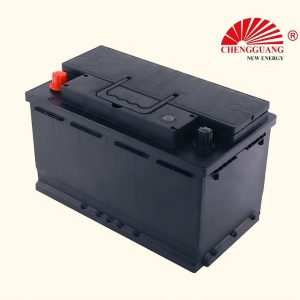
Chengguang Energy 58043 (DIN80 / 580.43) — DIN-standard automotive battery. Maintenance-free, 80Ah, 750 A. OEM factory-direct, IATF 16949 certified.
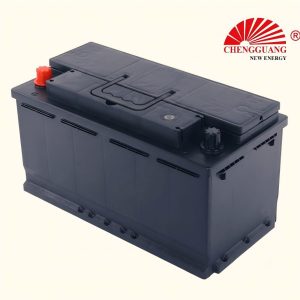
Chengguang Energy 58827 (DIN88 / 588.27) — DIN-standard automotive battery. Maintenance-free, 88Ah, 800 A. OEM factory-direct, IATF 16949 certified.